


Card Ladder
5.0208.00 Reviews
App Specs
- Version
- 4.2.1
- Updated On
- License
- Free
- Downloads
- 100,000+
- Developer
- Ladder Studios, Inc.
- Categories
- Sports
- Platform
- Android
Screenshots
 Analysis by AppCompare
I approach a sports-card collection differently when I can connect the cards I own with the market context around them. That is the job Card Ladder sets out to do: help collectors organize what they have and make sense of changing values. I find the idea most useful when a collection is more than a handful of cards and memory alone is no longer a reliable way to track it.
From a pile of cards to a useful record
My practical starting point is to gather the details of the cards I want to track before I open the app. That small bit of preparation makes it easier to search deliberately instead of guessing at names or scrolling without a plan. I would begin with the cards I care most about—perhaps a few favorites, recent purchases, or pieces I might consider selling—then build outward as I learn how the collection view fits my habits.
This approach matters because a collection is not just a number. A card can be personally important, difficult to replace, or part of a set I am trying to complete, even when its market movement is not exciting. I would use the app’s value and history information as context for decisions, not as a command to buy or sell. Market insight is most useful when it supports your own collecting goals rather than replacing them.
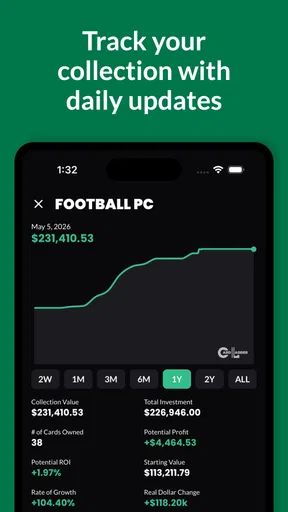
There is also a useful distinction between checking a price once and keeping a collection record over time. A quick search can answer a narrow question, but a saved collection gives me a reason to return and compare what has changed. If I were starting fresh, I would add cards in manageable batches and make a habit of reviewing them after purchases or trades. That is more dependable than trying to reconstruct everything after months away.
Following a card from search to decision
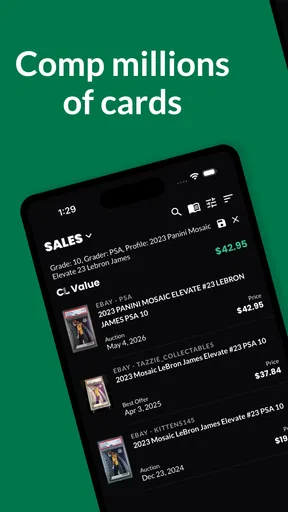
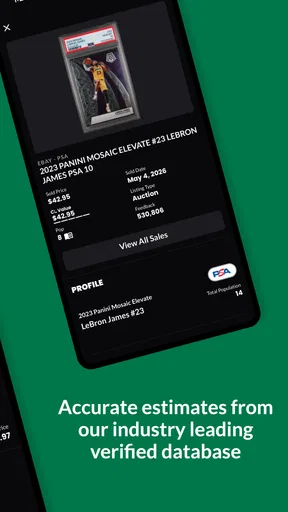
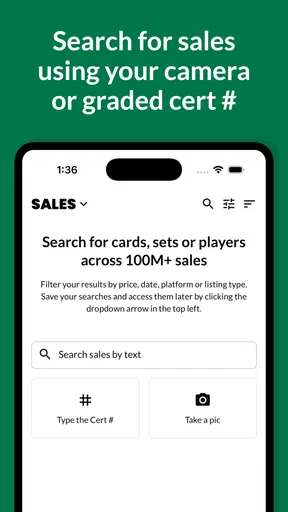
Once I have a card in mind, I can use the search tools to locate it, inspect its value information, and consider its historical movement. The database is described as covering cards across multiple sports, and that breadth makes the app appealing to collectors whose interests are not limited to one player or era. Search is still only as useful as the details I enter: when cards look similar, I would slow down and check that I have the right version before treating a displayed figure as relevant to my copy.
That is a practical point for anyone comparing a card in hand with market information. A displayed value can help set expectations, but condition and the exact card being compared matter. I would not treat a broad match as an appraisal of my individual copy, especially if I were making a meaningful purchase or sale. The app can help me frame questions and spot movement; careful identification and judgment still belong to me.
The Ladder section offers another step in that process by giving watched cards a visual way to follow increases and declines. I would use it to keep an eye on a short list rather than monitor every card I have ever liked. A focused watchlist is easier to interpret: if several cards connected to a player or release move at once, I can notice the pattern without turning ordinary fluctuations into a reason to react immediately.
Worth Reading Before You Choose

EA SPORTS FC Mobile 26 Is a Bigger Football Game, but It Takes Time

Flipboard Shows What News Apps Must Do Beyond the Feed

Switching to Android Auto Means Rethinking Your Driving Routine

Google Calendar Makes a Crowded Week Easier to Manage

Ludo King Makes the Most of the Minutes Between Plans

Baby Panda World Brings Quick Play to Modern Phones, but Its Game Library Feels Busy
Putting market context to work
The news section can add a different kind of context to price history. Sports-card interest can be affected by developments around players and releases, so I like having industry reading alongside collection tools. I would treat news as background, not a promise of future prices. A headline can explain why collectors are talking about a subject, but it cannot tell me what a particular card will be worth next week.
A realistic routine might start after a trade or purchase: I record the card, check that I have selected the intended one, look at its history, and decide whether it belongs on my watchlist. Later, I can revisit the collection before making another deal. That creates a useful handoff from a real-world transaction to a record I can consult, without asking the app to make the decision for me. For a collector who buys impulsively, that pause alone could be valuable.
Following other collectors can also offer ideas about what deserves a closer look. I see that as a discovery route, not a substitute for my own research. Someone else’s collection reflects their interests and choices, and a trending card may not fit my budget, collecting focus, or reasons for collecting. I would use community activity to broaden my awareness, then return to my own list and decide what is actually relevant.
How the app fits a collector’s routine
I recently had the chance to dive into Card Ladder, an app that’s been buzzing around in the collector community. If you're a sports card enthusiast like me, you know how important it is to keep track of your collection's value and market trends. Let me walk you through my experience with this app and why it might just become your next favorite tool.
Getting Started with Card Ladder
First things first, downloading Card Ladder was a breeze. Available on both Android and iOS, it’s pretty convenient for everyone, no matter what device you're carrying around. Once I had it installed, I was greeted with a clean and user-friendly interface. It’s not cluttered at all, which is a big plus when you’re trying to navigate a world of data.
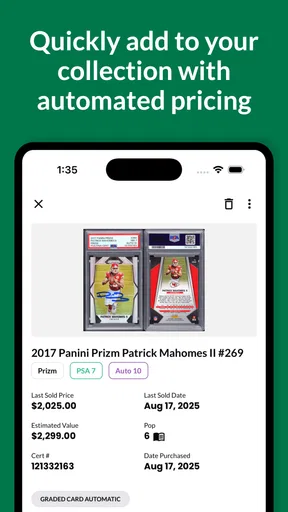
Setting up my profile was straightforward. I could easily add my cards to the collection, and the app quickly pulled up their market value. I love how it doesn’t just stop there; it offers insights into historical trends, which is crucial if you’re looking to make informed buying or selling decisions.
Diving into Features
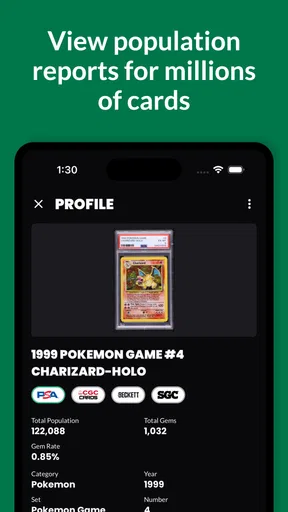
One of the standout features of Card Ladder is its comprehensive database. We're talking about thousands of cards across multiple sports, and I found the search functionality to be quite robust. Whether it's a vintage card or a recent release, the app seems to have information on just about everything. The ability to track both individual card values and the overall market is incredibly valuable.
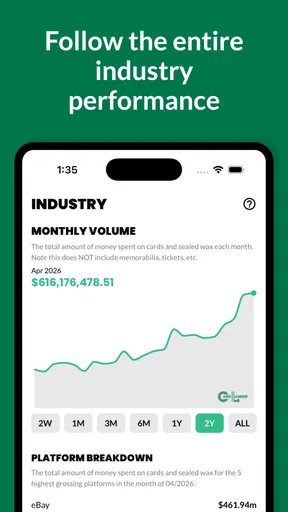
Another feature that caught my attention was the Ladder section. This nifty tool allows you to watch cards as they climb or fall in value, providing a visual representation of market movements. It’s like having a stock ticker but for sports cards. For those of us who are serious about our collections, this is a game-changer.
The app also offers a news section. Staying updated with industry news can help anticipate market changes, and Card Ladder does a great job of curating relevant articles and updates. It’s like having a personal assistant keeping you informed about everything from player performances to upcoming releases.
User Experience and Community
One thing that I really appreciate about Card Ladder is how it fosters a sense of community. There’s a feature that allows you to follow other collectors and see what's trending in their collections. It’s a great way to connect and even discover new cards that might pique your interest.
The app also encourages feedback and regularly updates its features based on user input. It’s clear that the developers are listening, and as a user, that makes me feel like my experience really matters. It’s these little things that enhance the user experience and keep me coming back.
Value, fit, and the points I would weigh
For someone building a collection across sports or trying to understand how individual cards relate to wider market movement, this kind of focused tool offers more than a general notes app or a spreadsheet. A spreadsheet can be customized and kept entirely on your terms, but it asks you to supply and maintain the market context yourself. Card Ladder brings collection tracking, value information, historical trends, a watch section, news, and collector activity together, which is convenient when I want to move from one question to another without assembling several sources.
That convenience does not make it the right choice for every collector. If I mainly want to catalog cards for sentimental reasons, with no interest in trends or market decisions, a simple inventory method may be less demanding. Likewise, a collector who prefers to research every comparable sale manually may want a separate workflow and use this app only as a reference. Its strongest fit is for people who genuinely return to market information, not those who only need a one-time estimate.
I would also avoid treating a large collection as a reason to enter everything immediately. The more useful first pass is often a carefully chosen subset: cards I would insure, sell, trade, or watch closely. That gives me a manageable test of the search and tracking routine before I invest time in a full catalog. If the process feels worthwhile, I can expand it; if not, I have not turned a hobby into a data-entry chore.
Everyday use, from a trade to a later check
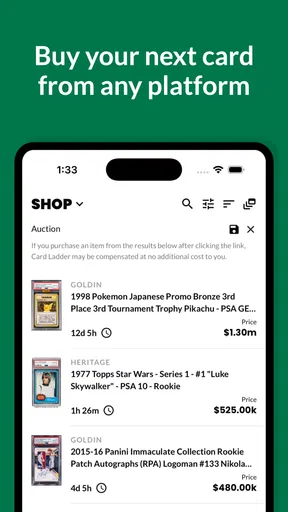
Imagine I am at a card show and spot a card I have been considering. Before making an offer, I can search for it, check the historical context, and compare that with what I already know about my collecting goals. I would still inspect the physical card and ask questions about its condition. The app helps me arrive better prepared; it cannot examine the copy in front of me or negotiate the deal.
After the show, I can add a card I bought to my collection and decide whether to watch it. Later, if I am considering a trade, the saved record gives me a starting point for reviewing what I own rather than relying on a vague recollection. This is a useful handoff between the offline hobby and a digital record. It is particularly practical for collectors who make occasional purchases but do not want to maintain a detailed spreadsheet after every transaction.
There is a trade-off in how closely I follow changes. Checking every movement can make normal variation feel urgent, while checking only when I am about to buy or sell may miss broader context. I would settle on a rhythm that matches my purpose: occasional review for a long-term personal collection, more frequent attention for a short list of cards I am actively considering. The point is to use the history to improve perspective, not to turn collecting into constant price watching.
Who should try it, and who may prefer another approach
I would recommend giving it a look if you collect sports cards across different players or eras, want a central record, and enjoy seeing market history alongside your own holdings. It may also suit a newer collector who wants a structured way to learn what to research before buying. The app is free to download, is rated for Everyone, and is made by Ladder Studios, Inc. Its average rating is 4.5 from around 650 ratings, with more than 50,000 installs, which suggests it has found an audience among collectors.
More experienced collectors may value the combination of collection tracking and market context, but should keep their own standards for card identification and condition assessment. If you are buying a high-value card, a market view is only one part of due diligence. I would cross-check the exact card and the physical condition before committing, rather than letting a single displayed estimate settle the question.
On the other hand, I would skip it if I do not collect sports cards, have no interest in market trends, or simply want an uncomplicated list of possessions. It is also not a replacement for direct conversation when a trade depends on details about a specific card. The community side can surface ideas, but a feed of other people’s interests is not the same as trusted advice tailored to my collection.
Cost, version, and the final call
The app is free, with in-app purchases ranging from $19.99 to $199.99 per item, so I would look at what is included at the point I consider paying and decide whether those options match my actual routine. A free starting point makes it easier to explore the basic fit before spending, while the range of optional purchases is worth keeping in mind if I prefer to avoid add-on costs. It runs on operating systems from version 7.0 and is currently at version 3.15.0.
My main caution is simple: market tools can make collecting feel more precise than it really is. A trend is useful context, but a card’s exact identity, condition, and the reason I want it still matter. I would use Card Ladder to organize what I follow, spot questions worth researching, and keep a clearer view of my collection—not to automate buying or selling decisions.
Overall, I see it as a focused companion for collectors who want their cards and market context in the same routine. Its database, historical information, Ladder tracking, news, and community features give me several ways to move from discovery to a more considered decision. The app will not remove the judgment that makes collecting personal, and it can feel unnecessary if prices are not part of the hobby for me. But if I want a more organized way to keep track of cards and understand the market around them, I would give it a try and build my collection record at a pace I can maintain.
Pros
- Comprehensive card database for collectors.
- Real-time market updates and trends.
- User-friendly interface for easy navigation.
- Detailed price history and analytics.
- Customizable watchlists for favorite cards.
Cons
- Limited free features; subscription needed.
- Occasional data sync issues reported.
- Some features require learning curve.
- Mobile version lacks desktop features.
- Customer support response can be slow.
FAQs for Card Ladder
What is Card Ladder and how does it work?
Card Ladder is a comprehensive platform designed for sports card enthusiasts to track the value of their card collections. It offers real-time data, historical price trends, and detailed analytics to help users make informed buying and selling decisions. By connecting to multiple marketplaces, it provides up-to-date information right at your fingertips.
Is the Card Ladder app free to use?
Card Ladder offers both free and paid subscription options. The free version provides basic features like card tracking and some market insights. However, the premium subscription unlocks advanced analytics, detailed historical data, and personalized alerts, making it ideal for serious collectors and investors.
What devices are compatible with Card Ladder?
Card Ladder is available for both Android and iOS devices. You can download it from the Google Play Store for Android or the App Store for iOS. The app is optimized for both smartphones and tablets, ensuring a seamless experience regardless of your device type.
How accurate is the data provided by Card Ladder?
Card Ladder prides itself on offering highly accurate and reliable data. It aggregates information from multiple verified sources, including popular marketplaces and auction sites. The platform uses advanced algorithms to analyze trends and price movements, ensuring users receive the most accurate information available.
Can I import my existing card collection into Card Ladder?
Yes, Card Ladder makes it easy to import your existing card collection. Users can manually add cards or use the import feature to upload data from spreadsheets. This functionality allows collectors to quickly start tracking their collections and see how their investments are performing over time.


